Học từ Facebook #57: Hàng đợi lệnh cho video và stream sắp lại chunk
Facebook nén hàng đợi lệnh play/pause/seek khi video chưa sẵn sàng; RelayAsyncStreamPool sắp lại chunk lệch thứ tự và phát lại cho người đến muộn.

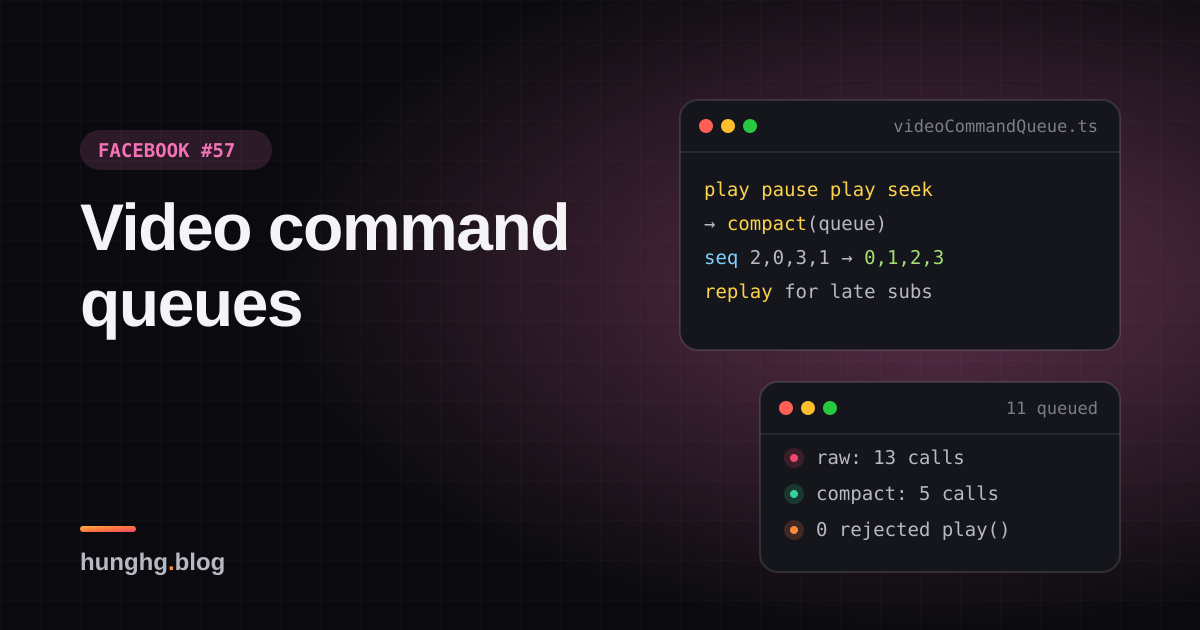
Hai bài toán, cùng một ý: thứ tự và trạng thái cuối quan trọng hơn từng sự kiện.
- Trình phát video của Facebook nhận lệnh từ nhiều nơi: người dùng bấm play, feed tự phát khi cuộn tới, nút tắt tiếng, thanh tua. Lúc
<video>chưa gắn vào trang (đang tải, đang đổi nguồn), các lệnh dồn lại. Chạy lại cả chuỗiplay, pause, play, seek, seek…khi element sẵn sàng là thừa, và mỗipause()chen giữa haiplay()làm Promise củaplay()bị reject. - Dữ liệu GraphQL dạng
@defer/@streamvề thành nhiều chunk có số thứ tự. Mạng có thể giao chunk 3 trước chunk 1. UI phải nhận đúng thứ tự, và component mount sau vẫn phải thấy các chunk đã về.
Tip
Tóm tắt
- Hàng đợi lệnh video: khi xả, mỗi loại lệnh (seek, volume, rate…) chỉ giữ lệnh cuối;
playvàpausexoá lẫn nhau. Trạng thái người dùng muốn (volume, muted) được áp sau cùng, thắng trạng thái DOM. - Promise của
video.play()được theo dõi: created, resolved, rejected (kèm lý do như autoplay bị chặn). - Stream pool: chunk đúng lượt thì phát và xả tiếp các chunk chờ liền sau; đến sớm thì cất. Người đăng ký muộn nhận lại toàn bộ chunk cũ.
- Bản gốc có hai lỗi: lỗi đúng lượt bị bỏ qua khi đã có
completeđến sớm (stream treo mãi), vàstart()được gọi sau khi đã phát lại sự kiện cũ.
▶ Mở demo toàn màn hình ↗ · Sửa code trên StackBlitz ↗ · Xem source trên GitHub ↗
#Facebook làm thế nào?
#Hàng đợi lệnh cho video
Module VideoPlayerImplementationStateMachineHostCallQueue (có trong bundle 26.VideoPlayer/all.js và vài bundle khác). Mỗi "host call" là một lệnh gửi xuống element: host_call_play, host_call_pause, host_call_set_current_time, host_call_set_volume, host_call_set_muted, host_call_set_playback_rate, host_call_set_video_quality, mỗi lệnh có hostCallID riêng.
applyOrQueueHostCall: có element thì áp ngay, không thì dispatch lệnh vào state machine (lệnh nằm trong controlledState.hostCallQueue). Khi element sẵn sàng, flushHostCallQueue nén hàng đợi rồi áp. Giải mã hàm nén:
function compact(queue) {
  let out = [];
  const dropPlayPause = () => (out = out.filter((c) => c.type !== 'host_call_play' && c.type !== 'host_call_pause'));
  const dropType = (t) => (out = out.filter((c) => c.type !== t));
  queue.forEach((cmd) => {
    switch (cmd.type) {
      case 'host_call_play':
      case 'host_call_pause': dropPlayPause(); break;     // play/pause là MỘT nhóm
      default: dropType(cmd.type);                       // seek, volume, muted, rate, quality
    }
    out = out.concat([cmd]);                             // lệnh mới luôn đứng cuối
  });
  return out;
}

function flush({ state, machine, videoElementAPI, engineExtrasAPI, reason }) {
  const desired = [
    { type: 'host_call_set_volume', payload: { volume: state.controlledState.volume, reason } },
    { type: 'host_call_set_muted', payload: { muted: state.controlledState.muted, reason } },
    { type: 'host_call_set_video_quality', payload: { selectedVideoQuality: state.controlledState.selectedVideoQuality, reason } },
  ];
  const calls = compact(state.controlledState.hostCallQueue.concat(desired));
  calls.forEach((hostCall) => applyOrQueueHostCall({ hostCall, machine, videoElementAPI, engineExtrasAPI }));
  machine.dispatch({ type: 'implementation_host_call_queue_flushed', payload: { hostCallsFlushed: calls } });
}Chú ý dòng concat(desired): volume/muted/chất lượng lấy từ controlledState (trạng thái mong muốn mà UI giữ) được nối vào cuối rồi mới nén. Lệnh volume cũ trong hàng đợi bị thay bằng giá trị mong muốn mới nhất. Nguồn sự thật là state của UI, không phải element.
Khi áp host_call_play, video.play() trả về Promise. Facebook dispatch ba sự kiện: dom_event_play_promise_created, …_resolved, …_rejected (kèm playPromiseRejectionReason, ví dụ NotAllowedError khi autoplay có tiếng bị chặn). Lệnh nào ném lỗi khi áp thì dispatch implementation_host_call_failed kèm videoElement.error, networkState, readyState để biết element đang ở trạng thái nào.
#RelayAsyncStreamPool
Module RelayAsyncStreamPool (bundle 3.js) quản lý nhiều stream theo id. Mỗi stream có events (đã phát, theo thứ tự), pendingEvents[seq] (đến sớm), observers, status (0: mở, 1: có complete/error đến sớm đang chờ, 2: đã đóng).
next(id, data, seq) {
  const s = get(id);
  if (s.status === CLOSED) return;
  if (seq === s.events.length) {               // đúng lượt
    s.events.push({ kind: 'next', data, sequenceNumber: seq });
    s.observers.forEach((o) => o.next(data));
    for (let k = seq + 1; k < s.pendingEvents.length; k++) {   // xả các chunk chờ liền sau
      const ev = s.pendingEvents[k];
      if (ev == null) break;
      s.events.push(ev);
      // complete/error: đóng stream và thoát; next: phát cho observers
    }
  } else {
    invariant(seq > s.events.length && !hasOwn(s.pendingEvents, seq), 'trùng hoặc lùi');
    s.pendingEvents[seq] = { kind: 'next', data, sequenceNumber: seq };
  }
}
subscribe(id, observer) {
  const s = get(id);
  s.events.forEach((ev) => replay(observer, ev));   // phát lại toàn bộ sự kiện cũ
  s.observers.set(nextId++, observer);
  observer.start(subscription);                    // start() gọi SAU replay
}Hai chỗ có vấn đề:
complete(id, seq)vàerror(id, err, seq)bắt đầu bằngif (status !== OPEN) return. Khi mộtcompleteđã đến sớm (status = 1, đang chờ), mộterrorđến đúng lượt bị bỏ qua. Vị trí đó không bao giờ được lấp,completeđang chờ không bao giờ được xả: stream treo mãi, observer không nhận lỗi cũng không nhận complete.forceComplete/forceErrorcũng chỉ chạy khi status = 0 nên không cứu được.subscribephát lại sự kiện cũ trước rồi mới gọiobserver.start(subscription). Theo hợp đồng của Observable,startphải chạy trước mọinext, để observer có subscription trong tay (ví dụ để huỷ ngay giữa lúc phát lại). Ngoài ra, observer vẫn được thêm vàoobserverscủa stream đã đóng (không rò gì nhiều, nhưng thừa), vàpendingEventskhông được dọn sau khi xả.
sequenceDiagram
  participant N as "Mạng"
  participant P as "StreamPool"
  participant U as "UI (observer)"
  N->>P: "seq 2: bình luận #3"
  P->>P: "cất vào pending[2]"
  N->>P: "seq 0: bình luận #1"
  P->>U: "next #1"
  N->>P: "seq 1: bình luận #2"
  P->>U: "next #2"
  P->>U: "xả pending[2]: next #3"
  N->>P: "seq 3 complete"
  P->>U: "complete"
#Viết lại
Nén lệnh và xả hàng đợi:
src/lib/videoCommandQueue.ts
/** Nén hàng đợi: giữ lệnh cuối mỗi loại, play/pause tính chung một loại. */
export function compactCommands(queue: VideoCommand[]): VideoCommand[] {
  let out: VideoCommand[] = [];
  for (const cmd of queue) {
    const group = cmd.type === 'play' || cmd.type === 'pause' ? 'playback' : cmd.type;
    out = out.filter((c) => (c.type === 'play' || c.type === 'pause' ? 'playback' : c.type) !== group);
    out.push(cmd);
  }
  return out;
}src/lib/videoCommandQueue.ts
  return {
    send(cmd) {
      if (video) run(cmd);
      else queue.push(cmd);
    },
    attach(el) {
      video = el;
      if (!el) return;
      const { volume, muted } = desired();
      const all = queue.concat([{ type: 'volume', volume }, { type: 'muted', muted }]);
      queue = [];
      for (const cmd of compact ? compactCommands(all) : all) run(cmd);
    },
    pending: () => queue.slice(),
  };
}Stream pool:
src/lib/streamPool.ts
  private deliver(s: Stream<T>, ev: Event<T>) {
    s.events.push(ev);
    const observers = [...s.observers.values()];
    if (ev.kind !== 'next') {
      s.done = true;
      s.observers.clear();
      s.pending.clear();
    }
    for (const o of observers) {
      if (ev.kind === 'next') o.next(ev.data);
      else if (ev.kind === 'error') o.error(ev.error);
      else o.complete();
    }
  }

  /** Nhận sự kiện có số thứ tự `seq`. Đúng lượt thì phát và xả tiếp các sự kiện chờ liền sau. */
  push(id: string, seq: number, ev: Event<T>) {
    if (!Number.isInteger(seq) || seq < 0) throw new Error(`seq không hợp lệ: ${seq}`);
    const s = this.get(id);
    if (s.done) return;
    // Bản gốc: error()/complete() return ngay khi status = "có complete đang chờ".
    if (this.options.originalBehavior && ev.kind !== 'next' && s.pending.size > 0 &&
        [...s.pending.values()].some((p) => p.kind !== 'next')) return;
    const expected = s.events.length;
    if (seq < expected || s.pending.has(seq)) throw new Error(`seq ${seq} bị trùng`);
    if (seq > expected) {
      s.pending.set(seq, ev);
      return;
    }
    this.deliver(s, ev);
    for (let k = seq + 1; !s.done && s.pending.has(k); k++) {
      const next = s.pending.get(k)!;
      s.pending.delete(k);
      this.deliver(s, next);
    }
}Xem toàn bộ src/lib/videoCommandQueue.ts
src/lib/videoCommandQueue.ts
/**
 * Hàng đợi lệnh cho <video> có nén lệnh (ý tưởng từ VideoPlayerImplementationStateMachineHostCallQueue
 * của Facebook).
 *
 * Khi element video chưa sẵn sàng (chưa mount, đang đổi nguồn…), các lệnh play/pause/seek/volume
 * được xếp hàng. Lúc áp, không cần chạy lại cả chuỗi: chỉ trạng thái CUỐI mới quan trọng.
 * - mỗi loại lệnh (seek, volume, muted, rate) chỉ giữ lệnh cuối cùng;
 * - play và pause xoá lẫn nhau: chỉ còn lệnh cuối trong hai loại;
 * - thứ tự tương đối của các lệnh còn lại được giữ.
 */

export type VideoCommand =
  | { type: 'play' }
  | { type: 'pause' }
  | { type: 'seek'; time: number }
  | { type: 'volume'; volume: number }
  | { type: 'muted'; muted: boolean }
  | { type: 'rate'; rate: number };

/** Nén hàng đợi: giữ lệnh cuối mỗi loại, play/pause tính chung một loại. */
export function compactCommands(queue: VideoCommand[]): VideoCommand[] {
  let out: VideoCommand[] = [];
  for (const cmd of queue) {
    const group = cmd.type === 'play' || cmd.type === 'pause' ? 'playback' : cmd.type;
    out = out.filter((c) => (c.type === 'play' || c.type === 'pause' ? 'playback' : c.type) !== group);
    out.push(cmd);
  }
  return out;
}

export interface DesiredState {
  volume: number;
  muted: boolean;
}

export type PlayEvent =
  | { type: 'play_promise_created'; id: number }
  | { type: 'play_promise_resolved'; id: number }
  | { type: 'play_promise_rejected'; id: number; reason: string }
  | { type: 'command_failed'; command: VideoCommand; error: string; readyState: number; networkState: number }
  | { type: 'applied'; command: VideoCommand };

function apply(video: HTMLVideoElement, cmd: VideoCommand, id: number, emit: (e: PlayEvent) => void) {
  switch (cmd.type) {
    case 'play': {
      const p = video.play();
      // play() trả Promise: bị chặn autoplay hay bị pause() chen ngang thì reject
      emit({ type: 'play_promise_created', id });
      p.then(
        () => emit({ type: 'play_promise_resolved', id }),
        (err: unknown) => emit({ type: 'play_promise_rejected', id, reason: err instanceof Error ? err.name : String(err) }),
      );
      break;
    }
    case 'pause':
      video.pause();
      break;
    case 'seek':
      video.currentTime = cmd.time;
      break;
    case 'volume':
      video.volume = cmd.volume;
      break;
    case 'muted':
      video.muted = cmd.muted;
      break;
    case 'rate':
      video.playbackRate = cmd.rate;
      break;
  }
}

export interface VideoCommandQueue {
  /** áp ngay nếu có element, không thì xếp hàng */
  send(cmd: VideoCommand): void;
  /** gắn element (hoặc null khi gỡ); có element thì xả hàng đợi */
  attach(video: HTMLVideoElement | null): void;
  /** các lệnh đang chờ */
  pending(): VideoCommand[];
}

export function createVideoCommandQueue({
  desired,
  compact = true,
  onEvent = () => {},
}: {
  /** trạng thái người dùng muốn (volume/muted): luôn được áp sau cùng khi xả, thắng trạng thái DOM */
  desired: () => DesiredState;
  compact?: boolean;
  onEvent?: (e: PlayEvent) => void;
}): VideoCommandQueue {
  let video: HTMLVideoElement | null = null;
  let queue: VideoCommand[] = [];
  let nextId = 1;

  const run = (cmd: VideoCommand) => {
    if (!video) return;
    try {
      apply(video, cmd, nextId++, onEvent);
      onEvent({ type: 'applied', command: cmd });
    } catch (e) {
      // ghi kèm readyState/networkState để biết element đang ở trạng thái nào khi lỗi
      onEvent({
        type: 'command_failed',
        command: cmd,
        error: e instanceof Error ? e.message : String(e),
        readyState: video.readyState,
        networkState: video.networkState,
      });
    }
  };

  return {
    send(cmd) {
      if (video) run(cmd);
      else queue.push(cmd);
    },
    attach(el) {
      video = el;
      if (!el) return;
      const { volume, muted } = desired();
      const all = queue.concat([{ type: 'volume', volume }, { type: 'muted', muted }]);
      queue = [];
      for (const cmd of compact ? compactCommands(all) : all) run(cmd);
    },
    pending: () => queue.slice(),
  };
}Xem toàn bộ src/lib/streamPool.ts
src/lib/streamPool.ts
/**
 * Bộ đệm sắp lại chunk của stream theo số thứ tự và phát lại cho người đăng ký muộn
 * (ý tưởng từ RelayAsyncStreamPool của Facebook: dữ liệu @defer/@stream của GraphQL
 * có thể về lệch thứ tự, UI vẫn phải nhận đúng thứ tự).
 *
 * Khác bản gốc (xem bài viết):
 * - lỗi/complete đúng lượt vẫn được xử lý khi đã có complete "đến sớm" đang chờ
 *   (bản gốc bỏ qua, stream treo mãi);
 * - gọi start() TRƯỚC khi phát lại sự kiện cũ cho observer;
 * - dọn pending sau khi xả.
 */

export interface StreamObserver<T> {
  start?(sub: { unsubscribe(): void }): void;
  next(value: T): void;
  error(err: unknown): void;
  complete(): void;
}

type Event<T> = { kind: 'next'; data: T } | { kind: 'error'; error: unknown } | { kind: 'complete' };

interface Stream<T> {
  done: boolean;
  events: Event<T>[];
  pending: Map<number, Event<T>>;
  observers: Map<number, StreamObserver<T>>;
}

export class StreamPool<T> {
  private streams = new Map<string, Stream<T>>();
  private nextObserverId = 0;
  /** mô phỏng hành vi bản gốc để so sánh trong demo */
  constructor(private readonly options: { originalBehavior?: boolean } = {}) {}

  private get(id: string): Stream<T> {
    let s = this.streams.get(id);
    if (!s) {
      s = { done: false, events: [], pending: new Map(), observers: new Map() };
      this.streams.set(id, s);
    }
    return s;
  }

  private deliver(s: Stream<T>, ev: Event<T>) {
    s.events.push(ev);
    const observers = [...s.observers.values()];
    if (ev.kind !== 'next') {
      s.done = true;
      s.observers.clear();
      s.pending.clear();
    }
    for (const o of observers) {
      if (ev.kind === 'next') o.next(ev.data);
      else if (ev.kind === 'error') o.error(ev.error);
      else o.complete();
    }
  }

  /** Nhận sự kiện có số thứ tự `seq`. Đúng lượt thì phát và xả tiếp các sự kiện chờ liền sau. */
  push(id: string, seq: number, ev: Event<T>) {
    if (!Number.isInteger(seq) || seq < 0) throw new Error(`seq không hợp lệ: ${seq}`);
    const s = this.get(id);
    if (s.done) return;
    // Bản gốc: error()/complete() return ngay khi status = "có complete đang chờ".
    if (this.options.originalBehavior && ev.kind !== 'next' && s.pending.size > 0 &&
        [...s.pending.values()].some((p) => p.kind !== 'next')) return;
    const expected = s.events.length;
    if (seq < expected || s.pending.has(seq)) throw new Error(`seq ${seq} bị trùng`);
    if (seq > expected) {
      s.pending.set(seq, ev);
      return;
    }
    this.deliver(s, ev);
    for (let k = seq + 1; !s.done && s.pending.has(k); k++) {
      const next = s.pending.get(k)!;
      s.pending.delete(k);
      this.deliver(s, next);
    }
  }

  next(id: string, seq: number, data: T) {
    this.push(id, seq, { kind: 'next', data });
  }
  error(id: string, seq: number, error: unknown) {
    this.push(id, seq, { kind: 'error', error });
  }
  complete(id: string, seq: number) {
    this.push(id, seq, { kind: 'complete' });
  }

  /** Đăng ký: nhận lại mọi sự kiện đã phát (đúng thứ tự), rồi nhận tiếp sự kiện mới. */
  subscribe(id: string, observer: StreamObserver<T>) {
    const s = this.get(id);
    const key = this.nextObserverId++;
    const sub = { unsubscribe: () => s.observers.delete(key) };
    const replay = () => {
      for (const ev of s.events) {
        if (ev.kind === 'next') observer.next(ev.data);
        else if (ev.kind === 'error') observer.error(ev.error);
        else observer.complete();
      }
    };
    if (this.options.originalBehavior) {
      // bản gốc: phát lại trước rồi mới start(), và vẫn thêm observer vào stream đã đóng
      replay();
      s.observers.set(key, observer);
      observer.start?.(sub);
    } else {
      observer.start?.(sub);
      replay();
      if (!s.done) s.observers.set(key, observer);
    }
    return sub;
  }

  /** Số sự kiện đang chờ (để demo thấy pending được dọn). */
  pendingCount(id: string) {
    return this.streams.get(id)?.pending.size ?? 0;
  }
  isDone(id: string) {
    return this.streams.get(id)?.done ?? false;
  }
  clear(id: string) {
    this.streams.delete(id);
  }
}#Đi qua code
compactCommandsgán mỗi lệnh một "nhóm" (play/pausechung nhómplayback), xoá lệnh cũ cùng nhóm rồi thêm lệnh mới vào cuối. Thứ tự tương đối giữa các nhóm được giữ:seektrướcplayvẫn làseektrướcplay.attach(el)nối trạng thái mong muốn (desired()) vào cuối rồi mới nén, giốngflushHostCallQueue.applytheo dõi Promise củaplay()và báo sự kiện;runbắt lỗi và ghi kèmreadyState/networkState.StreamPool.pushgộpnext/error/completethành một đường: đúng lượt thìdelivervà xả tiếp; đến sớm thì cất vàopending(mộtMap, không phải mảng thưa).delivercủaerror/completeđánh dấudone, xoá observer, dọn pending.subscribegọistarttrước, phát lại sau, và chỉ thêm observer khi stream còn mở.
Khác bản gốc:
error/completeđúng lượt luôn được xử lý, kể cả khi đã cócompleteđến sớm. Demo "Complete đến sớm rồi lỗi": bản gốc để stream "vẫn mở (treo)", observer chỉ nhận hai bình luận; bản sửa đóng stream và báo lỗi cho cả người đăng ký đầu lẫn người đăng ký muộn.start()trước khi phát lại. Demo cho thấy người đăng ký muộn ở chế độ "giống bản gốc" nhậnbình luận #1, #2rồi mới tới▶ start.- Bản viết lại không có
video_quality(thuộc engine phát DASH riêng của Facebook) và không có state machine; hàng đợi là một mảng trong closure.
#Tại sao không làm cách khác?
Áp lệnh ngay, không cần hàng đợi? Element chưa có thì không áp được. Bỏ lệnh thì mất ý định của người dùng (bấm tắt tiếng lúc video đang tải).
Chạy lại cả hàng đợi, không nén? Demo: 11 lệnh thô thành 13 lần gọi lên element (thêm volume/muted mong muốn), một play() bị reject vì bị pause() chen ngang; bản nén chỉ 5 lần gọi, không reject nào, trạng thái cuối giống hệt. Trên trình phát thật, mỗi seek thừa là một lần tải lại đoạn video.
Chỉ lưu "trạng thái mong muốn" ({ playing, time, volume }) thay vì hàng đợi lệnh? Gần như tương đương, và là cách khai báo (declarative) gọn hơn. Facebook giữ hàng đợi có lẽ vì mỗi lệnh có hostCallID và reason để log, và vì seek là sự kiện (tua tới 10s) chứ không hẳn là trạng thái (suy đoán).
Stream: sắp xếp lại ở UI? Mỗi component tự sắp thì trùng code, và component mount muộn không có dữ liệu cũ. Pool dùng chung giữ thứ tự một lần, phát lại cho mọi người.
#Edge case và cạm bẫy
- Autoplay có tiếng bị chặn.
play()reject vớiNotAllowedError. Phải bắt Promise, không thì có lỗi "Uncaught (in promise)" trong console. Thường xử lý bằng cách tắt tiếng rồiplay()lại. pause()ngay sauplay()làm Promise củaplay()reject vớiAbortError("The play() request was interrupted by a call to pause()"). Nén lệnh tránh được phần lớn trường hợp này.- Seek trước khi có metadata. Gán
currentTimekhireadyState === 0có thể bị bỏ qua hoặc áp muộn tuỳ trình duyệt. Xả hàng đợi sau sự kiệnloadedmetadataan toàn hơn sau khi vừa gắn element. - Số thứ tự trùng hoặc lùi là lỗi giao thức: cả bản gốc (invariant) và bản viết lại đều ném lỗi.
- Pending phình ra nếu một chunk ở giữa không bao giờ tới. Cần timeout ở tầng mạng để gọi
errorvà đóng stream.
#Dùng trong dự án
// Video: mọi nơi gửi lệnh qua hàng đợi, không đụng thẳng element
const player = createVideoCommandQueue({
  desired: () => ({ volume: store.volume, muted: store.muted }),
  onEvent: (e) => {
    if (e.type === 'play_promise_rejected' && e.reason === 'NotAllowedError') {
      store.muted = true;
      player.send({ type: 'muted', muted: true });
      player.send({ type: 'play' });
    }
  },
});
// JSX: <video ref={(el) => player.attach(el)} />  (hoặc gọi attach trong onLoadedMetadata)

// Stream: tầng mạng đẩy chunk theo seq, UI chỉ subscribe
const pool = new StreamPool<Comment>();
socket.on('chunk', ({ id, seq, data, done, error }) =>
  error ? pool.error(id, seq, error) : done ? pool.complete(id, seq) : pool.next(id, seq, data));
const sub = pool.subscribe('comments:42', { next: addComment, error: showError, complete: hideSpinner });#Kiểm thử
Ví dụ test (bản phác, không có trong repo)
import { describe, expect, it } from 'vitest';
import { compactCommands } from './videoCommandQueue';
import { StreamPool } from './streamPool';

describe('compactCommands', () => {
  it('giữ lệnh cuối mỗi loại, play/pause xoá lẫn nhau', () => {
    expect(
      compactCommands([
        { type: 'play' }, { type: 'seek', time: 1 }, { type: 'pause' },
        { type: 'volume', volume: 0.2 }, { type: 'seek', time: 5 }, { type: 'play' }, { type: 'volume', volume: 0.8 },
      ]),
    ).toEqual([{ type: 'seek', time: 5 }, { type: 'play' }, { type: 'volume', volume: 0.8 }]);
  });
});

describe('StreamPool', () => {
  const collect = (pool: StreamPool<string>) => {
    const got: string[] = [];
    pool.subscribe('s', { start: () => got.push('start'), next: (v) => got.push(v), error: () => got.push('ERR'), complete: () => got.push('DONE') });
    return got;
  };

  it('sắp lại chunk lệch thứ tự', () => {
    const pool = new StreamPool<string>();
    const got = collect(pool);
    pool.next('s', 2, 'c'); pool.next('s', 0, 'a'); pool.next('s', 1, 'b'); pool.complete('s', 3);
    expect(got).toEqual(['start', 'a', 'b', 'c', 'DONE']);
  });

  it('lỗi đúng lượt vẫn được xử lý khi đã có complete đến sớm', () => {
    const pool = new StreamPool<string>();
    const got = collect(pool);
    pool.next('s', 0, 'a'); pool.complete('s', 5); pool.error('s', 1, 'x');
    expect(got).toEqual(['start', 'a', 'ERR']);
    expect(pool.pendingCount('s')).toBe(0);
  });

  it('người đăng ký muộn nhận start trước rồi mới tới dữ liệu cũ', () => {
    const pool = new StreamPool<string>();
    pool.next('s', 0, 'a');
    expect(collect(pool)).toEqual(['start', 'a']);
  });
});#So với thư viện và chuẩn web
HTMLMediaElement.play()trả Promise ở mọi trình duyệt hiện đại; chính sách autoplay của Chrome cho phép tự phát khi tắt tiếng.@defer/@streamcủa GraphQL (incremental delivery) được Relay và các client khác như Apollo, urql hỗ trợ theo cách riêng; điểm chung là phải ghép các phần trả về theo đúng vị trí, dù chúng về lệch thứ tự.- Video.js, Shaka Player, hls.js tự quản trạng thái element; khi tự viết trình phát trên
<video>, một hàng đợi lệnh như trên tránh được phần lớn lỗi "play() interrupted".
Bài liên quan: Học từ Facebook #22: MQTT ngay trong trình duyệt (cũng là chuyện ghép lại dữ liệu đến từng mảnh).
Bài này thuộc series Học từ mã nguồn Facebook (106 bài, đọc theo thứ tự).
Xem nhanh danh sách bài trong series
Phần 1
- Mở đầu: cách đọc code minify của Facebook
- #1 Dùng chung IntersectionObserver + infinite scroll
- #2 useViewportDuration: đo thời gian thực sự được xem
- #3 Preload code + data khi hover
- #4 Toast manager với external store
- #5 Network status + heartbeat backoff
- #6 ErrorGuard: bắt lỗi theo ngữ cảnh
- #7 Banzai: gom log theo lô + sendBeacon
- #8 Focus trap + Esc theo layer
Phần 2
- #9 Mẹo calc(… * 9999): container query, line-clamp, mũi tên carousel bằng CSS
- #10 Thanh cuộn tuỳ biến bằng CSS 3D
- #11 Modal cuộn bằng window, giữ vị trí trang nền
- #12 Popover, tooltip group và hovercard
- #13 Primitive Pressable + focus-visible
- #14 Tab "Xem thêm" + sticky header bằng IntersectionObserver
- #15 Avatar khoét mask, gradient Messenger, skeleton steps()
- #16 Khung chat không giật
- #17 Thuật toán chọn bố cục collage ảnh
- #18 Keep-alive tab trong SPA
- #19 Tự đo Visual Completion & interaction tracing
- #20 Router SPA bền bỉ & tải chunk có retry
Phần 3
- #21 Smart Compose: gợi ý chữ mờ khi gõ
- #22 MQTT ngay trong trình duyệt, tự chuyển sang long-poll
- #23 Đo thời gian dùng bằng bitmap 64 giây
- #24 Bảng reaction nhấn giữ rồi trượt
- #25 Tìm kiếm gấp dấu, phiên âm và highlight đầu từ
- #26 Ring buffer biết trace nào đã mất log
- #27 Engine animation JS: một vòng rAF và solver cubic-bezier
- #28 Bootloader: bitmap tài nguyên đã tải, chỉ reload khi cần
- #29 Nhận biết click do screen reader tạo ra
- #30 Tải trước feed theo chất lượng mạng, đoán hạng thiết bị
- #31 Hàng đợi gửi tin chat giữ đúng thứ tự
- #32 Gộp lời gọi API trong cùng một tick
- #33 Resize ảnh trong pool Web Worker
- #34 Crop ảnh theo nhiều khuôn mặt
- #35 Kéo-thả sắp xếp và vùng thả file không nhấp nháy
- #36 Tiện ích UI: fade-out, sticky event, hàm huỷ được
- #37 Hạ tầng nhỏ: cookie, hash lỗi, prefetch khi chuột dừng
Phần 4–6
- #38 Đồng bộ tin nhắn: phát hiện lỗ seqID và fetch bù theo tầng
- #39 OTID: ID tin nhắn kiểu Snowflake sinh ở client
- #40 QPL: lấy mẫu từ lúc bắt đầu, đo RTT gửi tin đầu-cuối
- #41 Bộ điều phối request bảy chế độ gộp và chống trùng
- #42 Thread list theo mốc thời gian, cookie presence có version
- #43 Composer dạng plugin: reducer, dirty checker, chuỗi kiểm tra
- #44 Thanh toán bất đồng bộ: subscribe trước, poll dự phòng
- #45 Validate số thẻ: sửa lỗi gõ, dải BIN, Luhn
- #46 Lịch chọn khoảng ngày: bo góc dải chọn, phím đủ bộ, RTL
- #47 Giờ mở cửa theo tuần: qua đêm, gộp khoảng, phần bù
- #48 Tiến độ đăng realtime: giữ event chờ snapshot, watchdog
- #49 Tiền tệ theo đơn vị nhỏ nhất và ô nhập tiền
- #50 Sửa hàng loạt Empty/Uniform/Mixed, seen/read bằng 2 bit
- #51 Phát hiện script lạ hook vào hàm native
- #52 localStorage tự dọn khi đầy quota
- #53 Cache tuyến do server phân giải, chờ sẵn promise
- #54 Lưới phím mũi tên 2D và focus không làm cuộn trang
- #55 Tách emoji bằng máy trạng thái
- #56 Đọc trước ghi sau trong một frame, con tự biết vị trí
- #57 Hàng đợi lệnh cho video và stream sắp lại chunk (bài này)
Phần 7–10
- #58 Ước lượng băng thông EWMA: loại outlier, nhớ qua phiên
- #59 ABR theo độ tự tin phát và cắt bậc bitrate theo MOS
- #60 Prefetch segment dự đoán từ manifest, parse hộp sidx
- #61 Đọc metadata MP4/MOV ngay trên client
- #62 Upload tiếp tục được: offset, hash dedupe, phát hiện treo
- #63 Fenwick tree: chọn ngẫu nhiên có trọng số và offset dòng
- #64 Vạch trục số và trục thời gian "đẹp"
- #65 Damerau-Levenshtein theo dải chéo và tự sửa tên gõ sai
- #66 PRNG có seed, shuffle tái lập và lấy mẫu trace
- #67 Cặp min/max-heap tái dùng vị trí trong danh sách ảo
- #68 Memo nhiều đối số bằng Map/WeakMap và interning object
- #69 Thống kê cửa sổ trượt và đại số khoảng thời gian
- #70 Int64 từ hai số 32-bit, decode UTF, offset theo code point
- #71 Engine múi giờ IANA trên client, phát hiện lệch giờ
- #72 Tự cài semver range
- #73 Auto-link URL, cắt chữ an toàn, giới hạn LaTeX
- #74 Parser query kiểu PHP chống prototype pollution
- #75 Popover tự lật theo phần tràn nhỏ nhất
- #76 Tiền tố for(;😉 chống JSON hijacking, đọc stream
- #77 Chống lộ Referer, linkshim, xoá token trên URL
- #78 setImmediate bằng postMessage, gom delta chuột theo frame
- #79 Phát hiện crash qua heartbeat, dò proxy cache hỏng
- #80 DPR vào cookie cho ảnh @2x, che khoá trong log
- #81 Flux waitFor tự viết và proxy có đệm
- #82 Crop đúng tỉ lệ, xoay sticker bằng ma trận
Phần 11–15
- #83 Chia subdomain giữa các tab bằng lease, long-poll theo bảng trạng thái
- #84 MQTT QoS1: giữ publish chờ ack, gửi lại khi kết nối lại
- #85 Cache Promise gộp request, cache lỗi ngắn, đua dữ liệu nhúng sẵn
- #86 Lịch retry: backoff có trần, Fibonacci, báo lỗi CDN mỗi N ngày
- #87 Giữ nguyên tham chiếu nhánh dữ liệu không đổi
- #88 Store optimistic: copy-on-write, rollback rồi áp lại
- #89 Chỉ mục subscription theo record, hàng đợi task theo chiều sâu
- #90 Phân trang connection: cursor khớp đầu, edge không trùng
- #91 Profiler kiểu middleware và memo selector có lấy mẫu kiểm tra
- #92 Đọc EBML/WebM Cues để tìm byte range của segment
- #93 Stream HTTP Range tạm dừng được, tải tiếp đúng byte
- #94 Bảng khoảng thời gian gắn nhãn và nhảy qua lỗ buffer
- #95 Gom chunk cho SourceBuffer, đồng bộ video bằng playbackRate
- #96 Gom tin nhắn thành cụm, vạch ngày và avatar đã xem
- #97 Bao nhiêu tab chat vừa màn hình, chuỗi luật mở tab
- #98 Phím tắt Markdown trong editor, Backspace để hoàn tác
- #99 Offset theo code point hay UTF-16: bốn bug cùng một gốc
- #100 Typeahead không nhảy: cache tiền tố, chặn reflow, khoá hover
- #101 Hit-test trên canvas bằng phát lại path, nét đứt và cung Bézier
- #102 Vòng tròn theo mét trên bản đồ Mercator
- #103 Dò tính năng trình duyệt: ảnh EXIF 2×1, getter bẫy, scrollbar
- #104 Bug định dạng số và kiểm tra dữ liệu theo locale
- #105 Dispose cho đúng: idle callback, splice(-1), xoá nhầm key
Code + demo: examples/facebook-patterns · Mở trên StackBlitz